




Why Door Thickness Matters When Choosing Pull Handles
Home improvement and commercial fit-out projects often begin with what people can see. Finishes, colours, materials, and design features usually receive the most attention because they shape the first impression of a space. However, focusing only on the surface can leave important technical details overlooked.
Door hardware is a good example. Choosing and installing a pull handle may appear to be a simple part of the project, yet the final result depends on far more than the handle’s appearance or length. Door thickness, internal construction, fixing method, bolt length, and hardware compatibility all influence how securely the handle can be installed and how well it will perform over time.
In this post, we will explain why door thickness matters when selecting pull handles, how different door types affect installation, and what homeowners, builders, and designers should confirm before ordering door hardware.
Why Door Thickness Affects Handle Installation
Understanding how door thickness affects handle installation starts with the fixing components. A bolt, threaded rod, or spindle must pass through the door and still reach far enough into the handle, connector, or lock furniture to form a firm connection.
A component that is too short may not engage deeply enough, while one that is too long can prevent the hardware from tightening properly or leave unwanted thread exposed. Door thickness can also affect handle alignment and the fit of roses, escutcheons, latches, and back-to-back connections.
For this reason, handle length and fixing centres only tell part of the story. You should also confirm the complete finished door thickness, including any cladding or decorative surface layers, before ordering the hardware.
Australian Door Thicknesses Can Differ from Overseas Products
Many Australian internal doors are supplied at about 35 mm thick.
Entrance doors are often found in 40 mm or 42 mm options, although product ranges and custom designs vary. Some overseas external doors are commonly made closer to 44 mm thick.
That difference can affect the supplied hardware. Imported handles and lock furniture may arrive with bolts, spindles, or connectors selected for a thicker door. On a thinner Australian door, those parts may need to be shortened or replaced before the hardware can sit correctly.
The opposite issue can arise on a thick pivot or custom entrance door. Standard components may not span the full distance, so longer rods, extended spindles, spacers, or custom fixings may be required. This can arise in residential and commercial projects across Sydney, Melbourne, and other Australian locations where layered or oversized doors are specified.
Door Construction Determines the Fixing Method
Two doors can have the same finished thickness and still need different fixing methods. The internal structure determines where the load from the handle is carried and whether the door can support the chosen hardware.
Hollow-Core and Lightweight Timber Doors
A lightweight internal door may have a honeycomb core with a thin outer skin. That skin may not provide enough support for a large pull handle. Before drilling, the installer should locate any solid stile, lock block, framing, or reinforced area inside the door.
A heavy handle fixed only through a thin face can loosen with use or damage the surface. Reinforcement, through-fixing, or another handle position may be needed.
Solid, Pivot, and Clad Entrance Doors
Large entrance doors may contain solid timber, steel framing, insulation, external cladding, or several layers of material. The final thickness may therefore be greater than the structural panel.
Handle selection is best completed before the door is manufactured. The builder can then place reinforcement behind the fixing points and allow for concealed mounts or backing plates. This is especially useful when ordering pull handles for custom door projects where the size, position, and fixing method are being made to suit the entrance.
Aluminium-Framed and Glass Doors
Aluminium frames often contain hollow sections rather than a solid fixing area. The handle may need to connect with a structural section, threaded insert, internal bracket, or back-to-back fixing. Tightening a bolt against a thin aluminium face can distort the frame or allow movement.
Glass doors need hardware designed for the glass thickness and hole pattern. Toughened glass generally cannot be drilled or altered later, so the fixing centres, hole diameters, handle arrangement, and protective bushes or gaskets should be confirmed before manufacture.
How Bolts, Spindles, and Fixings Are Selected
The correct bolt length is based on the complete fixing assembly rather than the door thickness alone. The installer may need to allow for washers, spacers, mounting plates, decorative caps, connector depth, and enough thread inside the handle.
Back-to-back pull handles connect a handle on each side of the door through shared fixing points. Both handles need matching fixing centres, compatible threads, and a connection system suited to the finished door thickness.
Concealed fixings can create a refined finish, but they may require reinforcement or access during door manufacture. Visible fixings are usually easier to inspect and tighten. The preferred appearance should be discussed alongside the door structure, and professional guidance will help you make an informed purchase.
What to Confirm Before Ordering Pull Handles
Before placing an order, confirm the following details.
- Complete finished door thickness
- Door material and internal construction
- Location of framing or reinforcement
- Handle fixing centres and overall length
- Single-sided or back-to-back arrangement
- Concealed or visible fixing preference
- Supplied bolt, threaded rod, and spindle lengths
- Manufacturer-supported door thickness range
- Washers, spacers, plates, caps, or lock furniture used with the handle
These details help determine whether the standard fixing kit will suit the door or whether a custom solution will be needed.
Trust Push or Pull to Choose the Handle and the Fixing System Together
A pull handle should suit the door behind it as well as the design in front of it. Confirming the finished thickness, internal support, bolt length, spindle length, and fixing style before ordering can prevent loose handles, damaged surfaces, and last-minute changes during installation.
Push or Pull designs and manufactures custom door handles in Australia for residential and commercial projects. The team can help align the handle size, material, finish, and fixing requirements with the actual door construction.
Explore the custom door handle service, review the designer pull handle range, or contact our team with your door measurements and project details.
Frequently Asked Questions
Do Mortice Locks Also Have Door Thickness Limits?
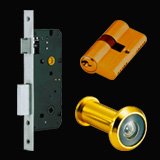
Mortice locks require a cavity to be cut into the door edge. The lock body, spindle, cylinder, and furniture must suit the available thickness. Some Australian commercial mortice locks support a stated door range, while separate components may be needed for thicker doors.
Checking the exact product specification is safer than relying on one general minimum. A lock that is too wide for the door can leave limited material around the case, weaken the edge, or create alignment problems.
Can a Large Pull Handle Be Fitted to a Hollow Door?
It may be possible when there is solid support at the fixing points. The installer should confirm the position of the stile, lock block, or added reinforcement before drilling.
When Are Custom Fixings Needed?
Custom fixings may be needed for thick pivot doors, clad doors, aluminium frames, glass doors, lightweight internal doors, and installations outside the standard thickness range supplied with the handle.

